Anterior cruciate ligament (ACL) injury
Content Description
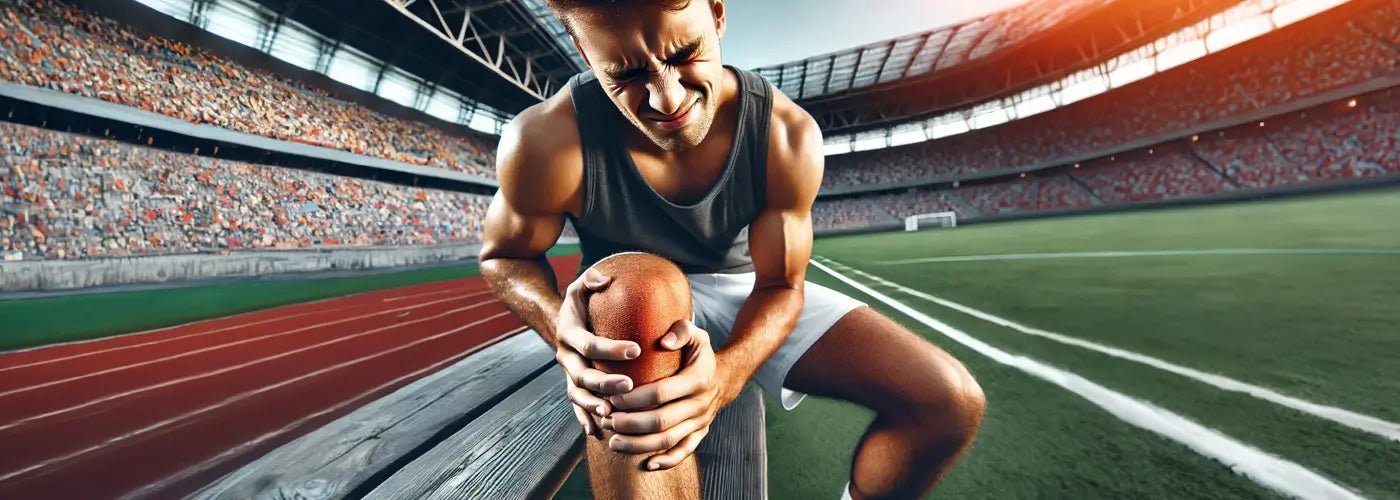
An anterior cruciate ligament (ACL) injury in the knee is one of the most common severe knee injuries in sports, especially in sports involving twisting and changes of direction such as football, handball, and alpine skiing. When the ACL is injured, a sudden feeling of instability and pain often occurs. It is important to understand the symptoms, how the injury happens, as well as how to treat and rehabilitate to be able to return to activity.
Symptoms of ACL Injury
Typical signs when the anterior cruciate ligament is torn are:
- The knee gives way or "collapses" under load
- A loud pop or crack is heard at the time of injury
- Immediate pain with swelling within one or two hours
- Stiffness and difficulty fully straightening the knee
- Feeling of instability, as if the knee is loose or unsteady
Grading of anterior cruciate ligament injury (ACL)
To assess the extent of an anterior cruciate ligament injury, injuries are classified into three different grades:
- Grade 1: Minor tear in the cruciate ligament. Pain occurs, but the function and stability of the knee joint are not significantly affected.
- Grade 2: A larger tear leading to instability and impaired function in the knee joint.
- Grade 3: Total rupture of the cruciate ligament, resulting in extensive functional impairment and instability. In many cases, surgery and long-term rehabilitation are required to restore knee joint stability.
How does the injury occur?
Anterior cruciate ligament injury typically occurs during sudden, forceful movements such as twisting, changes of direction, landings, or falls. Often, it's the combination of torque, a bent knee, and load that strains the ACL beyond its tolerance. This frequently happens in sports involving fast running and jumping. Inevitably, weak muscles, poor technique, and fatigue can contribute to the injury occurring.
Diagnosis and examination
To make a diagnosis, clinical tests such as the Lachman test and anterior drawer test are used to measure instability. A doctor or physiotherapist performs these tests after assessing the pain pattern and injury mechanism. Ultrasound is rarely sufficient for ACL injuries; therefore, an MRI scan is done to confirm the diagnosis and map out any concomitant findings such as meniscal injuries or ligament injuries.
Treatment and rehabilitation
Initial treatment
For partial injuries or in older and less active individuals, a conservative treatment may be sufficient. After initial rest and pain relief, a rehabilitation program with physiotherapeutic assistance is started. The focus is on strengthening the quadriceps, hamstrings, and core stability to compensate for the injured ACL. The rehab phase can last 4–6 months and is individually adapted based on activity and goals.
Surgical treatment
In cases of complete rupture in young or active athletes, surgical reconstruction is usually appropriate. The damaged cruciate ligament is replaced with a tendon graft — often from the patient's own hamstring or patellar tendon. After surgery, a rehab program lasting 9–12 months follows. Early mobility is important, while protection against twisting movements is used during healing.
Rehabilitation strategy
The rehab program takes place in phases: initial mobility, strength building, and finally sport-specific training. Balance and proprioception training are central to preventing recurrence. A physiotherapist helps adapt the progression – from walking to jumping and direction training – for optimal return to physical activity.
When is surgery required?
The decision for surgery for an anterior cruciate ligament injury is based on the injury mechanism, the degree of instability, and the individual's activity level and goals. If the knee frequently gives out, or if you want to return to sports with twisting movements, surgery is often recommended. For more sedentary lifestyles, rehab alone may provide sufficient stability.
Recommended products


How long is recovery after an ACL injury?
Recovery varies depending on treatment. After surgery, 9–12 months of rehabilitation are often expected before full activity can be resumed.
Can I resume sports without surgery?
Yes, with strong musculature and adapted training, some can tolerate knee instability, but the risk of injury remains.
How are future injuries prevented?
Through neuromotor training, strength programs for leg and core muscles, and learning proper technique for jumping and twisting.
When do I need to seek medical care?
If the knee feels unstable, swells severely, or causes pain under load after trauma, you should contact an orthopedic specialist for examination.