
Unstable Ankle Joints
Table of content
Having unstable ankles is a common problem, especially after one or more sprains. Once the ankle has been injured, it often loses some of its stability, making it easier to sprain again – especially on uneven surfaces. Many people experience this during walks, runs, and in everyday life. Turning quickly, walking up stairs, or running in the woods can feel insecure if the ankle is not stable.
Symptoms of unstable ankles
Common signs of an unstable ankle are:
- Feeling of weakness in the ankle when walking or running
- Frequently recurring sprains, even with minor missteps
- The ankle easily gives way, especially on uneven surfaces
- Feeling of insecurity or fear of fully loading the foot
- Pain or ache around the ankle, especially after activity
These symptoms can come and go. For some, the problems are mainly noticeable during sports or activity, while others notice the instability even in everyday life.
Causes of unstable ankles
Unstable ankles usually occur after the ligaments in the foot have been injured, typically due to one or more ankle sprains. When ligaments become stretched or torn, they lose their ability to hold the ankle in place, increasing the risk of new injuries. Wearing incorrect shoes, such as high heels or shoes with poor support, can also increase the risk of instability, as can walking or running on uneven surfaces.
Treatment of unstable ankles
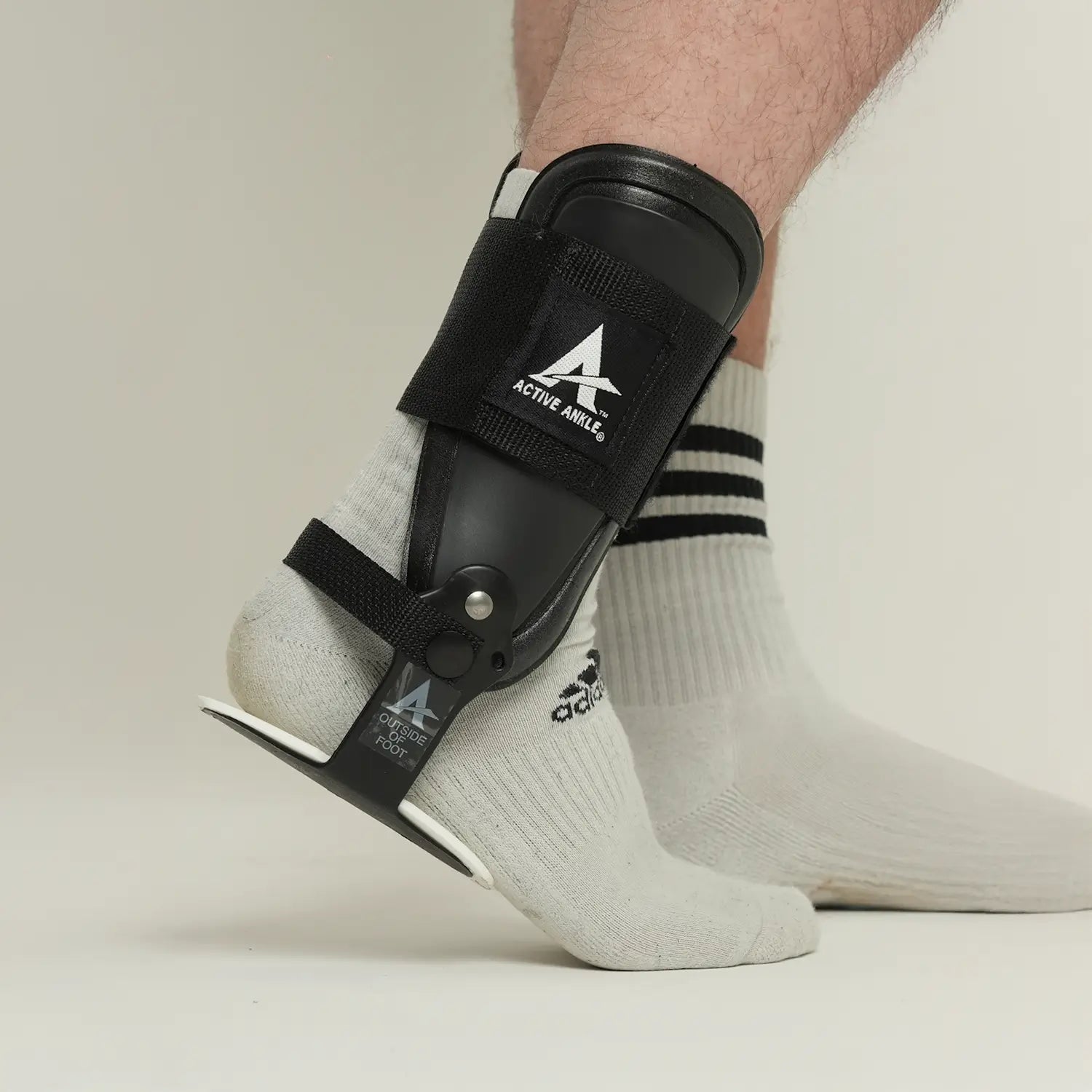
To treat unstable ankles, it is important to support the joint while building up strength and stability in the muscles around the foot. Consider using an ankle support or an ankle orthosis to relieve and stabilize the ankle in everyday life. There are different variations depending on how much support you need and what activity you are performing.
In addition to orthoses and supports, you can also work on balance and strength training. Simple exercises, such as standing on one leg, using a balance board, and doing calf raises, help restore stability. A physiotherapist can demonstrate the correct exercises and provide an individually tailored program.
For long-term or severe problems, surgery may sometimes be necessary, but for most, a tailored rehabilitation program and good support are sufficient.
Prevention of new sprains
To reduce the risk of new sprains or continued instability, you can:
- Strengthen muscles and train balance regularly
- Use ankle support during activities with a high risk of injury
- Choose shoes with good support and avoid high heels
- Train on different surfaces to accustom the joint to variation
When should I seek medical attention?
You should contact a physiotherapist, healthcare center, or orthopedic specialist if you:
- Experience recurring sprains despite caution
- Feel that your ankle is unstable or weak even under low load
- Have severe pain or suspect something is broken in your foot
In case of acute, severe pain, inability to bear weight on the foot, or clear deformities, you should seek immediate medical attention.


What is the difference between an unstable ankle and a regular sprain?
A regular sprain is an acute injury to the ligaments, while an unstable ankle means that the ligaments have become stretched or weakened so that the ankle feels insecure even after the injury has healed.
Can I exercise if I have unstable ankles?
Yes, but it is important to adapt your training. Balance exercises and strength training often help a lot, and an ankle support can increase confidence.
Do I always need to use ankle support?
No, most people only need support at the beginning or during activities with increased risk. As strength and stability improve, you can often manage without it.
Questions 4